ABI (Ankle-Brachial Index)
Professional, on-site diagnostic testing in Plainfield, NJ. Fast results for peace of mind.
The Ankle-Brachial Index test is a simple way to check for PAD—a condition where narrowed arteries reduce blood flow to the limbs. By comparing the blood pressure in your ankle with the blood pressure in your arm, we can assess your vascular health and circulation.
Why Choose Us for Your ABI (Ankle-Brachial Index)?
At Health-Wise Family Care Center, we minimize your wait time and eliminate the need for secondary hospital visits. Our advanced equipment ensures precise results, allowing our providers to quickly evaluate your health and build an effective care plan.
What to Expect
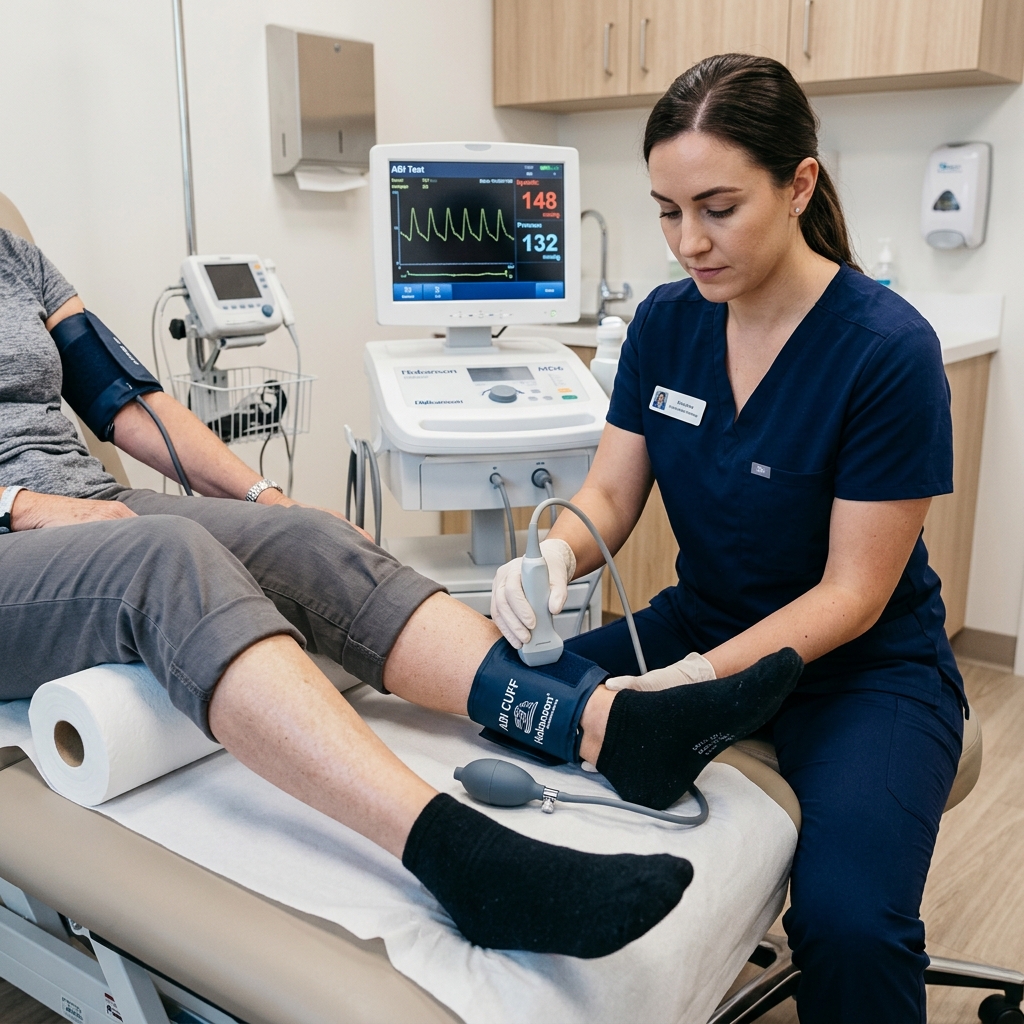
You will lie flat on an exam table. We will take blood pressure readings in both of your arms and both of your ankles using a standard blood pressure cuff and a specialized ultrasound device.
How to Prepare
Wear loose, comfortable clothing that allows easy access to your ankles and upper arms. You should rest for 10 to 15 minutes before the test begins.
Common Reasons for a ABI (Ankle-Brachial Index)
- •Leg pain while walking (claudication)
- •Numbness or coldness in the lower legs
- •History of smoking or diabetes
- •High cholesterol or hypertension
I was experiencing leg pain on my morning walks. The ABI test helped my doctor diagnose PAD early so I could start treatment.
Corporate & Occupational Health Benefits
Are you an employer? Our ABI (Ankle-Brachial Index) services are fully integrated into our occupational health programs. We provide fast, reliable testing to ensure your workforce remains healthy, safe, and compliant with industry regulations.
- ✓Comprehensive executive physicals
- ✓Vascular health monitoring for sedentary roles
- ✓Preventative wellness initiatives
Frequently Asked Questions
What does the ABI score mean?
The score is a ratio. An ABI between 1.0 and 1.4 is normal. A score below 0.9 indicates varying degrees of peripheral artery disease.
Is the test painful?
No, it feels exactly like getting your blood pressure checked.